

New Stitcher's Guide


What is Needlepoint?
Needlepoint is a canvas-based needle arts craft with a rich history. It’s stitched on open-weave canvas using thread, creating a durable, textured fabric that can be finished into pillows, bags, ornaments, purses, stockings, and more.
Unlike cross-stitch, needlepoint uses many different stitches to create depth, texture, and visual interest. It’s a slow, meditative craft that rewards patience, and the result is a beautiful, handmade piece you can keep for years (or gift to a special someone!)
Beginners love needlepoint because it’s forgiving: if you make a mistake, it’s easy to rip out a few stitches and try again. And because you’re working on a grid, you can learn as you go—no drawing or counting required.
Get started on your stitching journey with our tutorial!


What is Mesh Size?
Mesh count refers to the number of holes per linear inch on a needlepoint canvas — the higher the count, the finer the weave and the more detail possible. A 13-count canvas has larger holes that work up quickly and pair well with wool or thicker threads, making it a natural fit for bold designs and beginners. An 18-count canvas has finer holes that allow for greater detail and smoother color gradations, which makes it popular for portraits and intricate florals, though it requires more stitches to cover the same area.
All About Thread Types


All About Thread Types
Silk brings an unmatched luminosity to needlepoint that no other fiber can quite replicate. It glides smoothly through the canvas and comes in vibrant colors. It is also very durable so it is great for belts or hard-wearing projects.
Wool is the traditional needlepoint fiber, and for good reason. It is durable, forgiving, and naturally covers canvas well due to its loft and texture. Wool threads produce a matte, soft finish that works beautifully in geometric designs and anything meant to evoke a classic or heirloom quality.
A silk/wool blend offers a middle ground between the matte warmth of wool and the reflective quality of silk—enough sheen to give stitches life without the high contrast of pure silk. Blended threads are slightly easier to manage than silk alone and work especially well in landscapes or softly shaded florals where subtle gradations of tone matter.
Cotton thread is valued for its durability and affordability and is a great beginner thread. Cotton floss is a pliable thread, meaning you pull strands based on how much coverage you want on the canvas. It doesn’t pill and has a slight sheen but can feel more rigid to stitch with because it doesn’t have a lot of stretch.
Specialty threads are where a canvas really comes to life. Metallics catch the light in ways no standard fiber can, while overdyed threads shift color across a single strand for an effortless, painterly effect. Fuzzy or textured threads are great additions to bring animals to life. These threads are best used as accents rather than as a primary fiber, but thoughtfully placed, they can bring a lot of personality to your project.


Everything you need in one kit — no guesswork required
1 Canvas
2 All your threads
3 Tapestry needle
4 Project bag
5 Scissors
6 Instruction card


Pear Needle Minder
Mimi's Needlepoint

Pear Needle Minder
Mimi's Needlepoint
F*ck Around and Find Out Needle Minder
Mimi's Needlepoint

F*ck Around and Find Out Needle Minder
Mimi's Needlepoint
Pink Cowboy Boot Needleminder
Mimi's Needlepoint
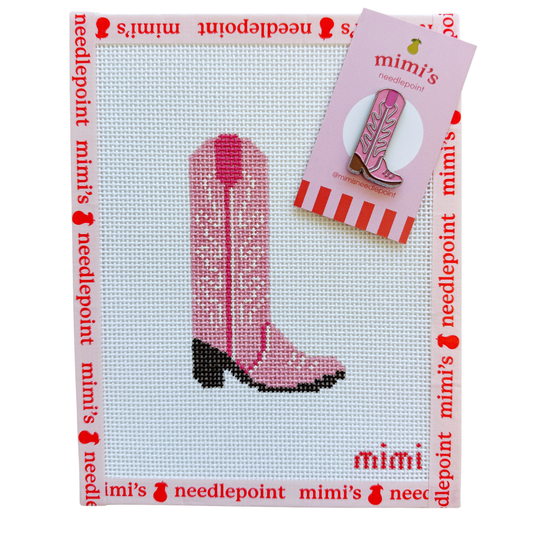
Pink Cowboy Boot Needleminder
Mimi's Needlepoint
Texas Hot Dog Needle Minder
Mimi's Needlepoint

Texas Hot Dog Needle Minder
Mimi's Needlepoint
Beginner-Friendly Canvases

Moon Beginner Kit
Mimi's Needlepoint Kits
Mini Heart Pattern
Tilli Tomas

Baby Canvas Blue
Goodpoint Needlepoint
Large Gingham Key Fob - Purple
Penny Linn
Large Gingham Key Fob - Blue
Penny Linn
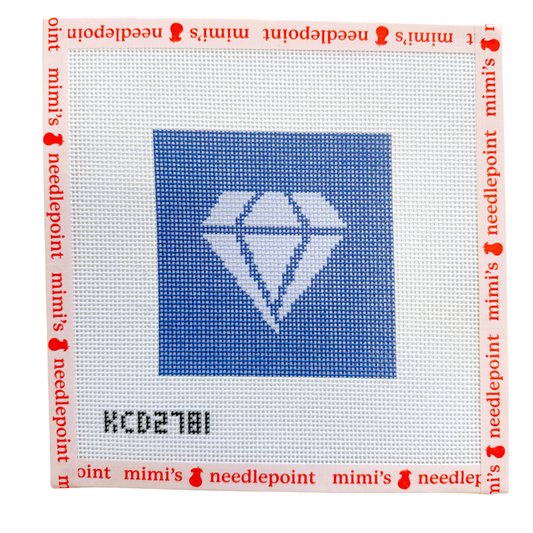
Diamond Beginner Kit
Mimi's Needlepoint Kits


Beginner FAQs
We’re so glad you’re here! We recommend you check out our beginner’s guide to get started. We also offer in-person classes at our Bishop Arts location in Dallas, TX.
You need a beginner-friendly canvas, a needle (every online and in-person canvas purchase comes with one!), threads, and small embroidery scissors.
We recommend a 13 mesh project as the bigger holes make it easier to stitch. We also recommend looking for a canvas with less colors and big blocks of color as opposed to lots of fine details. It may not be your favorite project ever, but that’s ok! You will likely make some mistakes on your first project, so it’s not the time to worry about perfection.
Shop beginner-friendly canvases here and read more about what makes a good beginner project.
Check out our thread guide to read more about the different threads available and what thread works for what mesh size. Thread color is a personal preference! We recommend starting with whatever color is the majority of the canvas, finding a thread color you love, and matching other colors from there. You can definitely color swap, but we do not recommend swapping a light color over darker paint, as sometimes the paint may slightly show through.
No! Stretcher bars are a personal preference. We don’t recommend them for beginners – we find it’s best to stitch your first project “in hand” to get the feel for it before investing in more supplies. Read more about stretcher bars and how to use them here.
There are almost endless things you can finish your project into! Pillows, stockings, belts, key fobs, framed keepsakes, ornaments, trays, coasters, bag straps, stand ups, even bean bag frogs! There are also a variety of self-finishing items that are no sewing required – just cut out your canvas and stick it into a wallet, passport cover, key fob, or tote bag and you’re all set. If sewing doesn’t scare you, we highly recommend the Cowtown Needlepoint online self-finishing course – use code MIMI15 for 15% off!
Needlepoint, cross stitch, and embroidery are all “cousin crafts” - they require a cloth, needle, and thread, but the techniques and materials are different. Needlepoint uses a stiffer material to stitch on called mono canvas, and the designs are painted onto the canvas before you stitch. Cross stitch uses an open-weave material called Aida cloth, and the cloth is often blank, and stitchers count where to stitch from a printed or digital pattern. Cross stitch also focuses primarily on one type of stitch (a cross) in cotton thread, while there is much greater stitch and thread variety in needlepoint.